
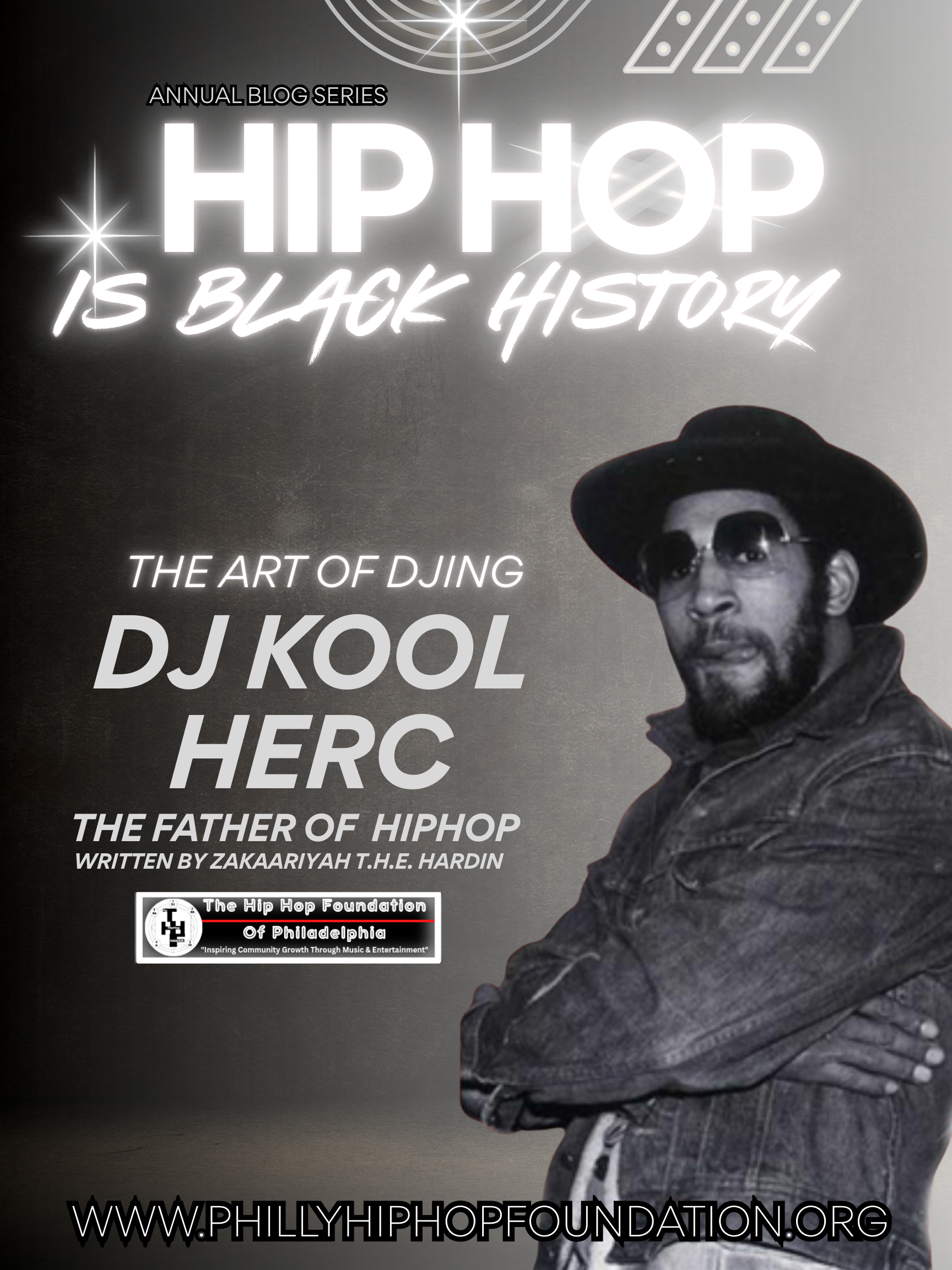
Hip Hop: A Black Invention That Changed the World
Hip Hop is not a trend. It is not a phase. It is not something that was “discovered.” Hip Hop was invented; by Black youth, in a forgotten corner of New York City, during a time when America had turned its back on urban Black communities. Born in the Bronx in the early 1970s, Hip Hop stands today as one of the most successful Black cultural inventions of all time. Like Jazz, Blues, Rock & Roll, and Soul before it, Hip Hop did what Black culture has always done: take struggle, transform it into expression, and then reshape the world.
When New York City was burning-literally and economically-Black and Brown youth were creating something revolutionary with nothing but turntables, cardboard, spray cans, and their voices. This wasn’t about fame. This was about survival. Hip Hop became a language for the unheard, a mirror for the unseen, and a system of self-worth in neighborhoods stripped of resources, funding, and opportunity. Long before radio spins, record deals, music videos, and global stages, Hip Hop was already changing lives at the block level.
Before the Industry, There Was the Lifestyle
Hip Hop transformed the daily lifestyle of urban Black youth before it ever touched mainstream media. It created alternative economies where none existed-DJing parties, throwing jams, designing flyers, customizing clothing, selling mixtapes, battling for respect instead of territory. Hip Hop gave young people an identity that wasn’t defined by poverty, gangs, or police statistics. It said, you are a creator, an artist, a thinker, a stylist, a leader.
The fashion alone tells the story. What the world now mimics-sneakers, baggy jeans, hoodies, fitted caps, gold chains-were once markers of Black urban identity that society looked down on. Hip Hop flipped that narrative. The same goes for dance, slang, posture, attitude, and confidence. Hip Hop didn’t ask for permission to be influential-it simply was. And the world followed.
A Culture That Curbed Violence and United Differences
One of Hip Hop’s most overlooked Black History contributions is how it reduced violence among gangs. In the Bronx, rival gangs that once fought with weapons began battling with turntables, dance moves, graffiti pieces, and rhymes. Competition replaced bloodshed. Crews replaced gangs. Skill replaced turf wars. Hip Hop created a neutral ground where respect was earned through creativity, not destruction.
Through its five elements-DJing, Emceeing, Breakin, Graffiti, and Knowledge of Self-Hip Hop became one of the most non-biased cultures in the world. Race, religion, gender, nationality, and language didn’t matter if you had skill and heart. Hip Hop unified people globally in a way few cultures ever have. From the Bronx to Philly, from Africa to Asia, from Europe to South America—Hip Hop spoke the same truth everywhere: we exist, and we matter.
DJ Kool Herc: A Black History Icon
At the center of this Black cultural revolution stands DJ Kool Herc, a Jamaican-born Black innovator and universally recognized founding father of Hip Hop. In August 1973, Herc hosted a back-to-school party at 1520 Sedgwick Avenue in the Bronx, inside the Sedgwick Houses (projects). What history often forgets; but Black History must remember is that this first Hip Hop party wasn’t about profit, it was about community.
DJ Kool Herc introduced the world to the breakbeat, using two turntables to extend the most rhythmic part of a record. This innovation changed music forever. It gave birth to breakdancing, influenced emceeing, and laid the foundation for modern DJ culture. But more importantly, that party raised money for underserved youth; specifically for back-to-school supplies. Hip Hop was community service before it was entertainment.
Hip Hop as an Economic Engine
That Sedgwick party quietly introduced a new economic model for Black youth. DJs got paid. Flyers were printed. Sound systems were rented. Clothes were bought. Sneakers were cleaned. Dancers practiced. Artists painted. Hip Hop circulated money inside the community, long before corporations figured out how to extract it. It created self-sustaining ecosystems where young people could earn respect, income, and opportunity without institutional approval.
As documented by trusted sources such as Smithsonian National Museum of African American History and Culture, Harvard Hip Hop Archive, The Bronx Museum, and firsthand accounts from pioneers like DJ Kool Herc, Afrika Bambaataa, and Grandmaster Flash, Hip Hop’s roots are deeply tied to Black innovation, resilience, and brilliance.
A Global Reflection of Black Genius
Today, Hip Hop is a multi-billion-dollar global industry. It influences fashion houses, tech marketing, sports culture, film, politics, and language itself. Yet its core remains unchanged: a Black cultural invention born from necessity, creativity, and collective healing. The world didn’t just adopt Hip Hop, it studied it, copied it, profited from it, and continues to revolve around it.
Hip Hop changed how the world sees Black people, not as problems to be solved, but as innovators, tastemakers, philosophers, and cultural architects. It forced the world to look at Black youth differently, to listen differently, and to move differently.
Black History, Every Day
Hip Hop is Black History that lives, breathes, and evolves daily. It is proof that even in the most underserved conditions, Black people create systems of beauty, power, and unity that uplift the world. From the Sedgwick Projects to Philadelphia streets, from park jams to radio waves, Hip Hop remains a living testimony of Black excellence.
To be a Hip Hopper is to stand in a lineage of creators who turned nothing into something, and then gave it to the world. This Black History Month, we don’t just celebrate Hip Hop. We honor it as one of the greatest Black inventions of all time.
And that is something to be proud of.
Written By: Zakaariyah T.H.E. Hardin